Logistics and warehousing
A logistics digital twin that shows what peak is costing you.
Synopton builds a live 3D twin of your hub and connects it to the WMS, yard and dock management, the robot fleet, cold-chain monitoring, carrier and client contracts, and CCTV. Every truck, door, pick face and client SLA sits on the asset it depends on, with a price attached.
Why peak costs more than it should
3PL hubs and retail DCs are paid per pallet and per order, and judged on the client’s cut-off.
Peak trucks arrive in the morning, the inbound doors close at night, and the biggest client slips below its on-time target.
The causes sit in different systems. The dock schedule shows every door busy by day and idle after 22:00. The WMS shows pick faces running empty mid-shift, because day forklifts are split between unloading and replenishment. Carriers bill waiting fees after two free hours, and the client contract pays a credit on every late order. Each line is small on its own report. Joined up on one hub, they are the largest cost of peak you can still control, and the cheapest fix is rarely more space.
What the logistics twin watches
Every signal is tied to a door, a zone, a robot or a client.
The twin watches
- Yard queue, door turns and waiting fees, hour by hour
- Client cut-offs and on-time rates, order by order
- Space by zone, pick faces and overflow options
- Robot fleet availability and charger faults
- Cold-store air temperature and door states
- Forklift and pedestrian near misses on camera
Decisions it drives
- Night window, booked slots or more space
- What recovers a client before renewal
- Repair, roll back or replace, priced against peak
- Where a crossing needs a gate
How it works in a warehouse
Read-only connections, a 3D model and a record of every decision.
- Connect. Read-only links to the WMS, yard and dock management, the robot fleet manager, cold-chain probes and door sensors, forklift telematics, the CMMS, carrier and client contracts, and CCTV.
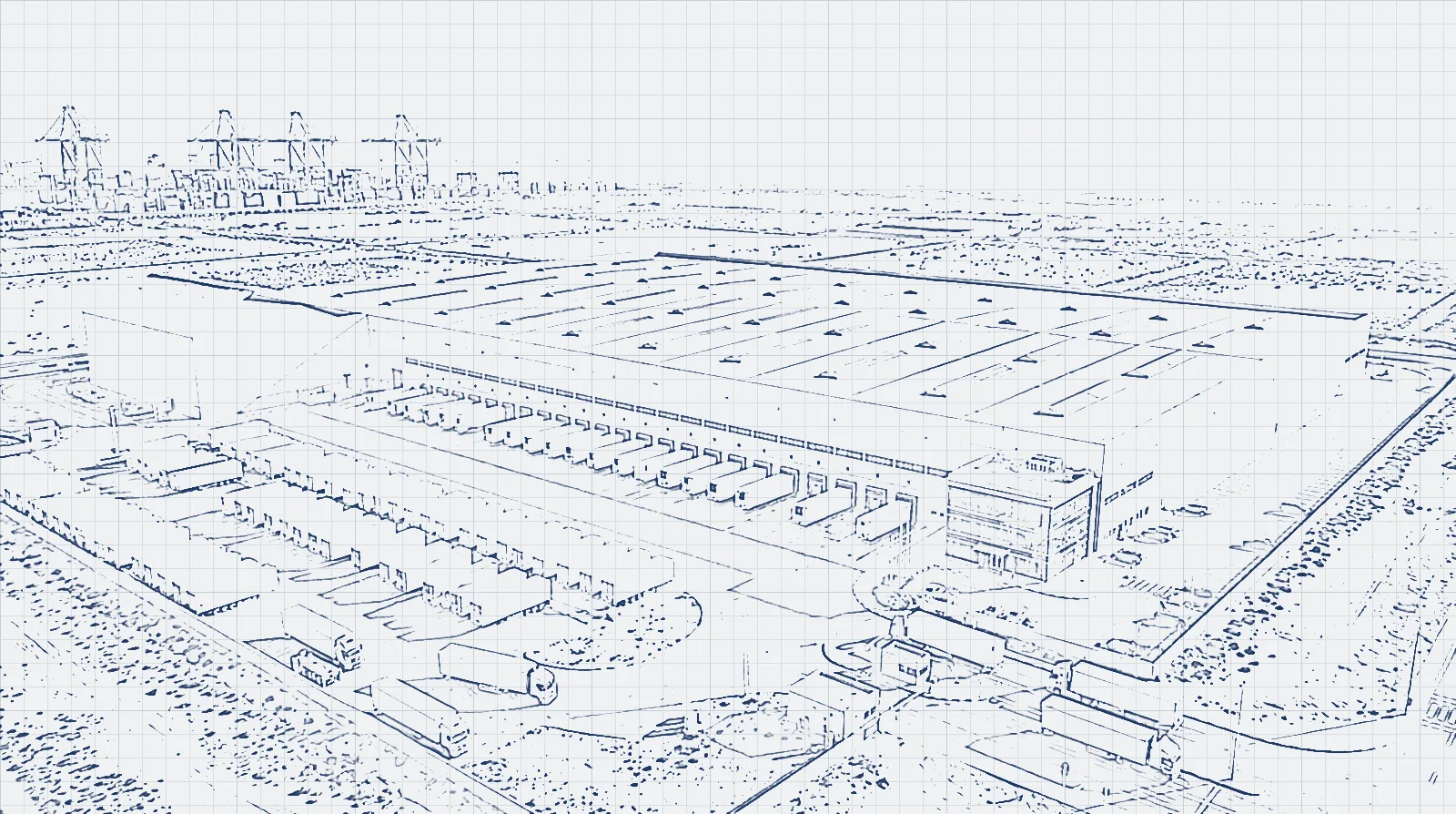
- Model. A 3D twin built from the site plan, racking layouts and dock schedule, or loaded from your BIM, with doors, zones, robots and cameras placed where they really are.
- Label. Every figure carries a provenance chip (measured, modelled, published, assumed or forecast) and a Why? panel that shows its inputs.
- Ask. Plain questions such as “why are trucks waiting?” come back with answers that cite the twin’s own data.
- Decide. Accepting a recommendation drafts a decision record with an owner and a deadline, and the twin then tracks the measured result.
See a logistics twin running
Falcon Gateway DC, in the demo.
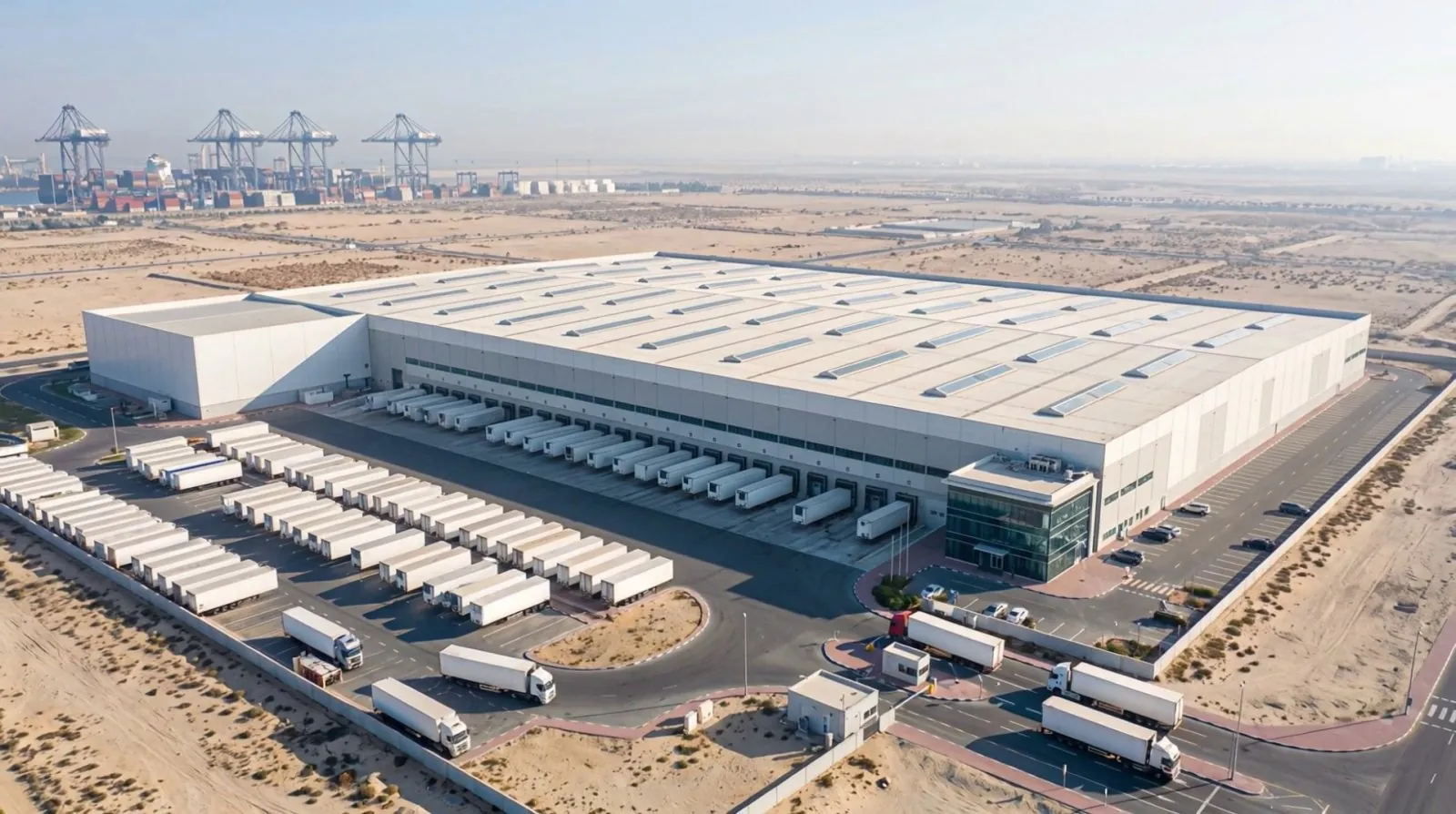
Falcon Gateway DC, a 120,000 m² third-party logistics hub with 64 dock doors and 13 clients, is fully built in the interactive demo. In peak, 410 inbound trucks a day arrive against 300 normally, mostly before 14:00, while the 24 inbound doors close from 22:00 to 06:00. Trucks wait 3.3 h on average, 113 are queuing by 11:00, and carriers bill AED 108k a day in waiting fees. The largest client, Souq Nova, is on time for 96.8% of orders against 98.5%, with its contract up for renewal in March. The twin prices a peak plan at AED 16k a day: a night receiving window, booked dock slots and night replenishment. The average wait falls to 12 minutes, Souq Nova reaches 99.3%, and a peak day costs AED 19k instead of AED 118k, about AED 6.0m over the 60-day peak. An overflow warehouse would cost AED 94k a day all in and still leave a 2.1 h wait.
IN THE DEMODemo names and figures are illustrative.
Questions buyers ask
Do we need a BIM model of the warehouse?
No. We build the 3D twin from the site plan, racking layouts, the dock schedule and an equipment list. If you have BIM, IFC or GLB models, we load them.
Does Synopton write to our WMS, yard system or robot fleet?
No. Connectors are read-only. Accepting a recommendation drafts a decision record for people to agree; nothing is written back to the WMS, the yard system or the robots.
How are client data and camera footage handled?
Client order data stays in your tenancy and staff references are masked by default. Camera detectors measure truck queues, door states and the distance between people and forklifts; faces are never stored, and revealing a name is written to the audit log.
How soon is the twin useful?
The twin is usable from week six of a 90-day pilot, and your team runs real decisions through it in weeks seven to twelve.
Other industries
The same platform runs twins of other assets that can’t stop.